

The Solace Project #31
OfficialWaje
Description
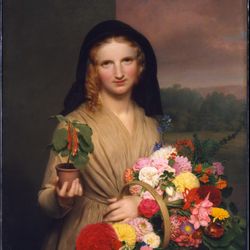
Hello Friends,<br/><br/>I have been thinking alot about close looking that I’ve been writing about for weeks and realize that my close looking, even as it connects to solace, is largely grounded in my training as an art historian. I’m looking, but as a step to research and investigation of the work of art.  I think, more and more, that we are looking too closely at the work of art and not at ourselves. <br/><br/>The transformative learning moment for me, long ago, came when I found Marcia Pointon’s circle of questions, her so-called Interrogation of a Work of Art.  <br/><br/>I had been trying for years to just look, step back, to control or contain my own desire to interpret and analyze, the looking that leads to the epiphanic discovery, that I had figure it out, the meaning of a picture, the key to the artist’s intention in the time he or she worked.  She stopped me dead in my tracks, and later helped me teach students who had no idea how to look at a work of art, with questions like: What is it? What is it made of? What condition is it in? Iit the only one? What is going on in it? How is it presented?  Eighteen questions. What could the artist have possibly wanted to convey, a question so filled with mystery when studying artists who were long gone, with only scant letters and documents, if any. We’d move to cultural awareness—for whom was it made, how did it get here, who acquired it and why, what did it cost, who looked at it, who looks at it, what did it mean, what does it mean—trying to see the work in the time and place it was created, thinking about people and settings, landscapes and interiors, endless things with potential symbolic meaning. And so much of our work was and is about discovery.<br/><br/>What I’m thinking about now is meeting people where they are, even meeting myself where I am, which leads to another line of looking and questioning.  Over the past few weeks, if you read or listen to my posts from Crystal Br
Creators
serenaM
Creator