
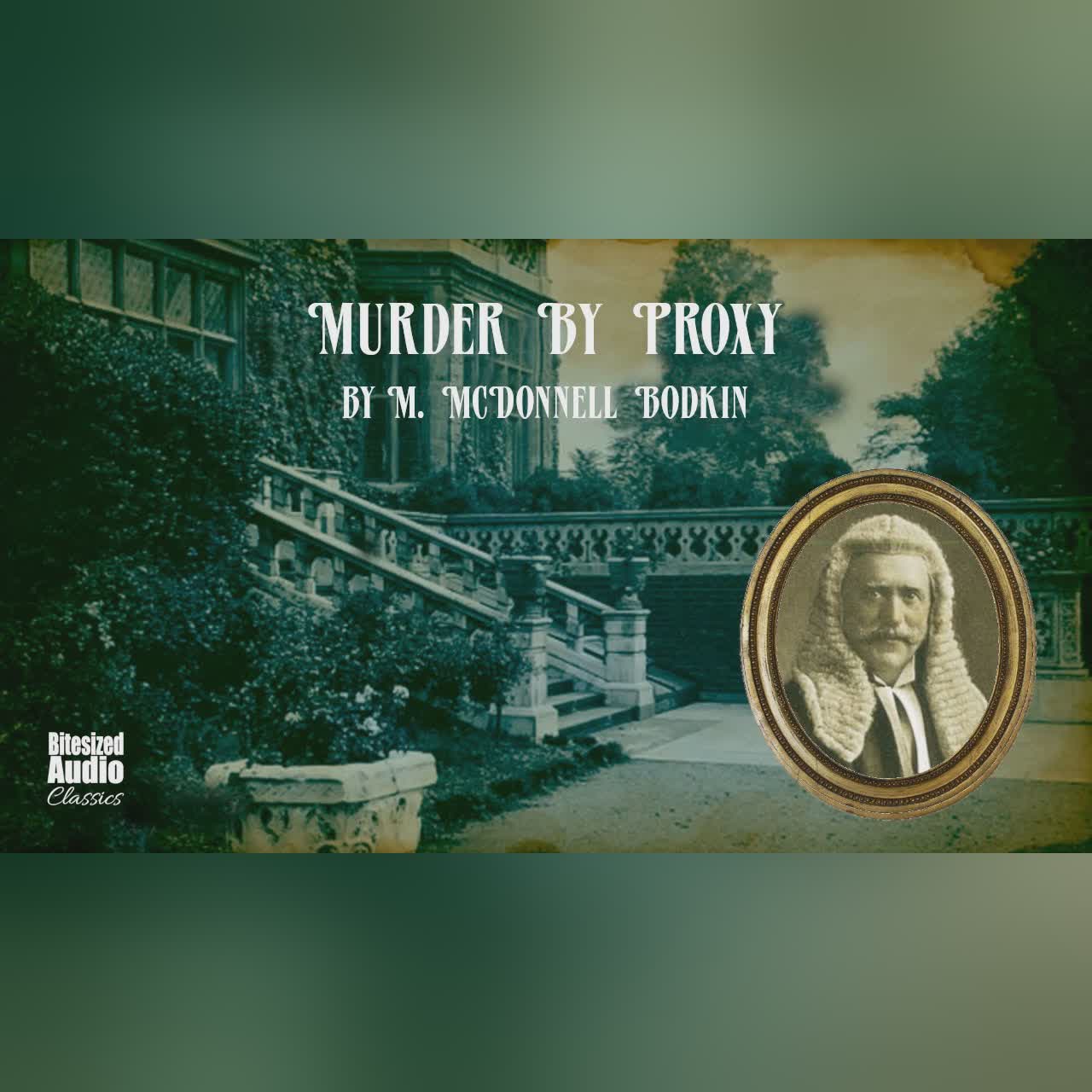

Murder by Proxy | M. McDonnell Bodkin | A Bitesized Audiobook
Alazar Pro Ethiopia
Description
A classic "locked room" mystery from 1897: Squire Neville is found shot dead in his study on a sultry August afternoon. Witnesses swear that no-one could have entered or left by the door or window, but the case is clearly murder. The victim's nephews, John and Eric, agree to call in the celebrated "rule of thumb detective" Paul Beck to investigate... Narrated/performed by Simon Stanhope, aka Bitesized Audio. If you enjoy this content and would like to help me keep creating, there are a few ways you can support me (and get access to exclusive content): * Occasional/one-off support via Buy Me a Coffee: https://www.buymeacoffee.com/bitesizedaudio * Monthly support on Patreon: https://www.patreon.com/bitesizedaudio * Visit my Bandcamp page to hear more of my performances of classic stories, and you can purchase and download high quality audio files to listen offline: https://bitesizedaudio.bandcamp.com/ * Become a Bitesized Audio Classics member on YouTube, from $1 / £1 / €1 per month: https://www.youtube.com/c/BitesizedAudioClassics/join Timestamps: 00:00:00 Introduction 00:01:20 Murder by Proxy 00:52:53 Credits, thanks and further listening Matthias McDonnell Bodkin (1850–1933) was born in County Galway, Ireland, the second son of a doctor. Over the course of a long career he was a journalist, newspaper editor, barrister (QC during the reign of Victoria), county court Judge (for County Clare) and, for a brief period (1892–95), a Member of Parliament for North Roscommon, sitting in the House of Commons as an Irish Nationalist during Gladstone's fourth and final term as prime minister. Somehow alongside all this he managed to find time to write fiction, which he produced quite prolifically from the 1890s through to the late 1920s. In this capacity he created two popular "rivals of Sherlock Holmes": Paul Beck, "the rule of thumb detective", who made his debut in 1897, and Dora Myrl, "the lady detective", whose adventures appeared in 1900. He subsequently had the ingenious idea of having them meet and work toget
Creators
Vince.Halo
Creator