
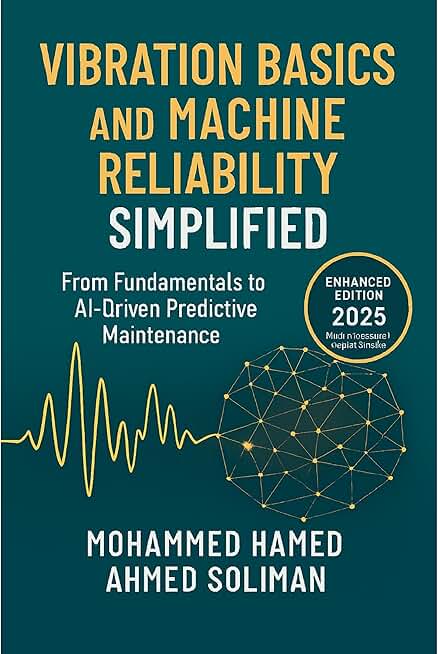

Vibration Basics and Machine Reliability Simplified: From Fundamentals to AI-Driven Predictive Maintenance
HyunA
Description
This enhanced edition transforms the classic guide into acomplete modern referencefor anyone involved in machinery health, reliability engineering, and predictive maintenance.Whether you are amaintenance engineer, reliability professional, or industrial manager, this book walks you from the core principles of vibration analysis to advanced AI-powered fault detection. The result is a clear, practical, and future-ready approach to keeping machines running at peak performance.What's New in the Enhanced Edition 2025:AI Integration:Learn how machine learning can detect faults weeks before failure.Modern Case Studies:Real-world examples from pumps, motors, gearboxes, and rotating equipment.Updated Methods:Digital twins, motion amplification, ultrasonic detection, and MCSA.Expanded Fault Coverage:From unbalance and misalignment to looseness, electrical defects, and rotor eccentricity.Foundation to Future:Bridging traditional techniques with Industry 4.0 predictive tools.Key Topics Include:Fundamentals of vibration analysis and machine dynamicsCommon fault types and their vibration signaturesData collection, sensor placement, and interpretation techniquesPractical corrective actions to eliminate root causesBest practices for a sustainable condition monitoring programAI-based workflows for automated diagnostics and RUL predictionWith clear explanations, step-by-step methods, and a balance oftheory and hands-on application, this book is yourgo-to resourcefor mastering both classical and modern vibration analysis.Read more
Uploader
HyunA
Related Works

Episodes (28)
Chapter 1 – Introduction and Terminologies
Chapter 2 – On-Site Tools for Vibration Measurements and Analysis
Chapter 3 – Measurement Techniques
Chapter 4 – Vibration Standards
Chapter 5 – Quick Examples & Case Studies
Chapter 6 – Types of Vibration Sensors
Chapter 7 – Data Collection Procedures
Chapter 8 – Frequency Analysis & Spectrum Interpretation
Chapter 9 – Time Waveform Analysis
Chapter 10 – Phase Analysis