
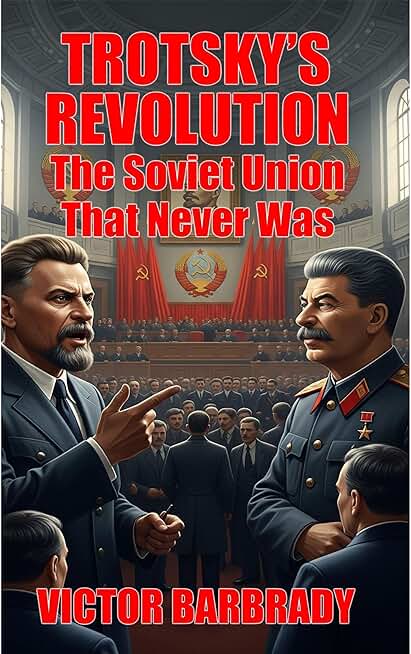

Trotsky's Revolution: The Soviet Union That Never Was
RK+UMA=SOURYAM
Description
From the chaos of a collapsing empire, three men emerged to forge a new world in fire and blood. Vladimir Lenin, the revolution's architect; Leon Trotsky, its brilliant commander; and Ioseb Stalin, its patient and ruthless administrator, would see their fates intertwined in a struggle that defined the twentieth century. This book meticulously traces their journey from comrades in arms to mortal enemies fighting for the soul of the state they built.Drawing on extensive historical records, the narrative first explores their rise to power amidst the storms of the October Revolution and the brutal Russian Civil War. It details the crucial roles each man played in the foundation of the Soviet Union, a period of violent collaboration where their immense talents were united against a common foe. Yet beneath the surface of victory, the deep-seated rivalries and irreconcilable visions that would later tear them apart were already taking root.The death of Lenin unleashes a ferocious struggle for his mantle, pitting the fiery internationalism of Trotsky against the grim nationalism of Stalin. The book provides a detailed account of this critical power struggle, analyzing how Stalin's quiet mastery of the party apparatus systematically dismantled Trotsky's authority. At the heart of this conflict was a war of ideas over the very nature of the revolution: Should it be exported to the world, or built in one country alone?Moving beyond established history, this work then engages in a rigorous and plausible counterfactual analysis. It asks the fundamental question: what if Trotsky had defeated Stalin? The narrative explores the key historical turning points where a different decision could have led to a Trotskyist victory, setting the stage for a dramatic alternate timeline.This alternate history paints a vivid picture of a world remade, examining how Soviet economic policy, cultural life, and political freedoms would have differed under Trotsky's rule. It culminates in a look at a new Cold War, a more volatile and overtly ideol
Creators
RK+UMA=SOURYAM
Creator