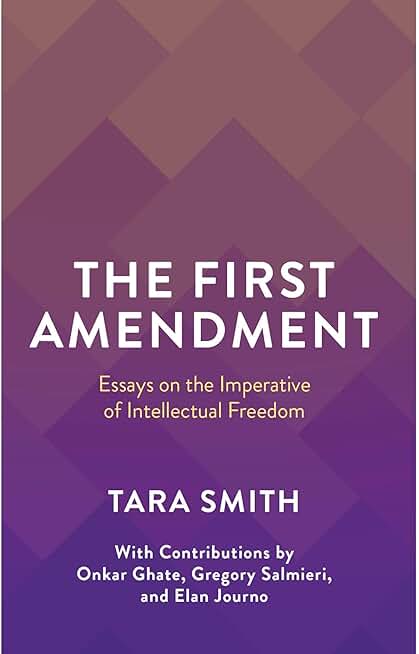

The First Amendment: Essays on the Imperative of Intellectual Freedom
🥀
Description
Discussions of the First Amendment often focus on specific freedoms that the text cites, including religion, press, and assembly. But philosopher Tara Smith’s new book usefully reminds us that those particular freedoms—and many more that Smith and the other contributors examine—are united by a crucial principle:intellectual freedom. The book demonstrates that the free mind is indispensable for a free society.—Nadine StrossenTara Smith’s masterful celebration of intellectual freedom is both subtle and forceful. She unhesitatingly carves out a place for herself as a warrior for freedom in the battles that Locke, Jefferson and Madison fought years ago and that require continued support today.—Floyd AbramsThe shared framework for all of these essays is the secular, individualist philosophy of Ayn Rand.Tara Smithis professor of philosophy at the University of Texas at Austin,Onkar Ghateis senior fellow at the Ayn Rand Institute, andGregory Salmieriis senior scholar of philosophy in the Salem Center of the University of Texas at Austin. Situating their analyses within the broader intellectual landscape, these scholars take up the views of such historical figures as John Locke, Thomas Jefferson and John Stuart Mill, while also addressing contemporary clashes over issues ranging from speech on social media, “cancel culture,” and the implications of “religious exemptions” to the crucial difference between speech and action and the very vocabulary in which we discuss these issues, dissecting the exact meanings of “censorship” and “freedom,” among others.Read more
Related Works

Episodes (14)
Preface
Acknowledgments
Chapter 1: What Good Is Religious Freedom? Locke, Rand, and the Non-Religious Case for Respecting It
Chapter 2: A Wall of Separation Between Church and State: Understanding This Principle’s Supporting Arguments and Far-Reaching Implications
Chapter 3: Religious Liberty or Religious License? Legal Schizophrenia and the Case Against Exemptions
Chapter 4: The Free Speech Vernacular: Conceptual Confusions in the Way We Speak about Speech
Chapter 5: Just Sayin’: How the False Equivalence of Speech with Action Undermines the Freedom of Speech
Chapter 6: Free Speech as a Right and a Way of Life
Chapter 7: Ayn Rand’s Distinctive View of Intellectual Freedom
Chapter 8: Today’s Crisis Over Freedom of Speech Tara Smith, Onkar Ghate, Gregory Salmieri, Elan Journo