
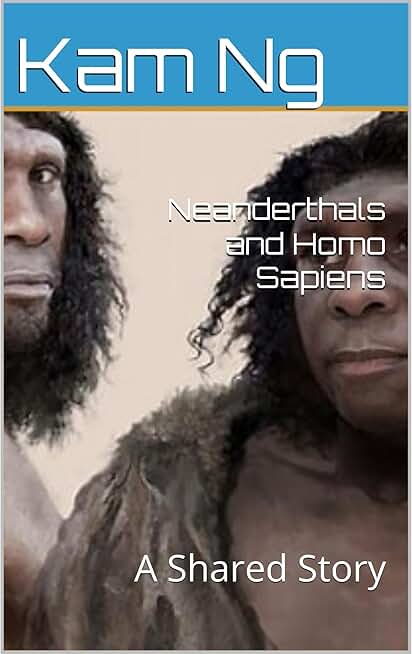

Neanderthals and Homo Sapiens: A Shared Story
user9728096683052
Description
The story of the Neanderthals is one of complexity, resilience, and humanity. Once thought of as primitive and brutish, modern science has revealed a species far more sophisticated and capable than early stereotypes allowed. The Neanderthals were not mere survivors of the Ice Age—they were masterful hunters, skilled toolmakers, and adaptive beings whose lives intertwined with the rhythms of the harsh Pleistocene world. Their robust, muscular bodies, shorter limbs, and barrel-like chests were perfectly designed to conserve heat, while their large cranial capacity—often greater than that of modern humans—suggested a mind well attuned to the demands of their environment. Their skulls, though distinctively shaped with protruding brows and elongated faces, housed brains capable of abstract thought, planning, and social coordination. Archaeological discoveries show that Neanderthals hunted large game with remarkable precision, crafted stone tools with technological sophistication, and likely communicated through structured speech. They lived in close-knit groups, shared food, cared for their injured and elderly, and possibly even mourned their dead—behaviors that reflected a deep sense of empathy and cooperation. Neanderthals’ diets were rich in protein from mammoths, bison, and deer, but recent evidence has shown they also consumed plants, nuts, and medicinal herbs. They used natural adhesives like birch tar for toolmaking, and pigments such as ochre and manganese may have been used for symbolic or decorative purposes. These practices reveal not only their ingenuity but also their emerging sense of artistry and identity—a profound bridge between the practical and the aesthetic. While they crafted clothing from animal hides to protect against bitter cold, Neanderthals never advanced to full-scale agriculture. They remained nomadic, following herds and seasons. Yet their understanding of the natural world was acute, and their adaptation to diverse environments—from European forests to Central Asian steppes—was nothing s
Uploader
user9728096683052
Episodes (1)
-