
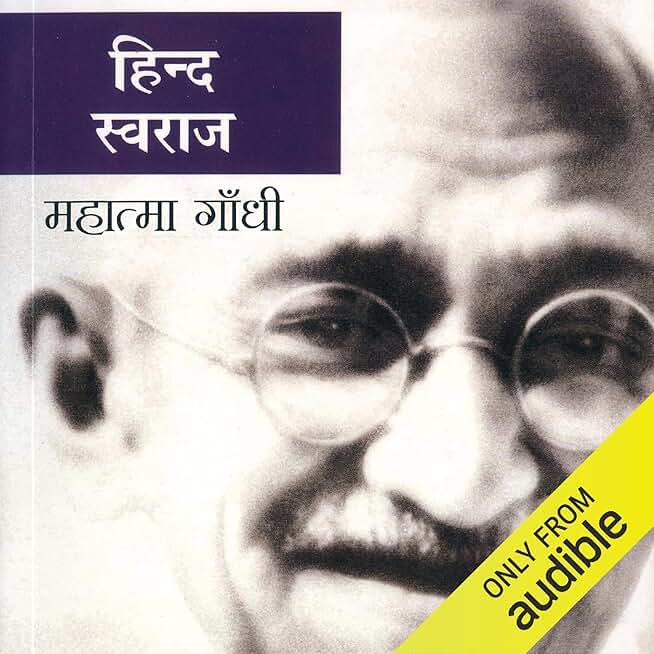

Hind Swaraj
Laycon
Description
Mohandas Gandhi wrote this book while traveling from London to South Africa on board SSKildonan Castlebetween November 13 and November 22, 1909. In the book Gandhi gives a diagnosis for the problems of humanity in modern times, the causes and his remedy.Gandhi'sHind Swarajtakes the form of a dialogue between two characters, The Reader and The Editor. The Reader essentially serves as the typical Indian countryman whom Gandhi would have been addressing withHind Swaraj. The Reader voices the common beliefs and arguments of the time concerning Indian Independence. Gandhi, The Editor, explains why those arguments are flawed and interject his own arguments. As The Editor Gandhi puts it, "It is my duty patiently to try to remove your prejudice."In the dialogue which follows, Gandhi outlines four themes which structure his arguments.1. First, Gandhi argues that ‘Home Rule is Self Rule’. He argues that it is not enough for the British to leave only for Indians to adopt a British-styled society. As he put it, “We want English rule without the Englishman.... And when it becomes English, it will be called not Hindustan but Englistan.”2. Gandhi also argues that Indian independence was only possible through passive resistance. In fact, more than denouncing violence, Gandhi argued that it was counterproductive; instead, he believed, “The force of love and pity is infinitely greater than the force of arms. There is harm in the exercise of brute force, never in that of pity.” This is essential throughHind Swaraj.3. In order to exert passive resistance, Gandhi reasons that Swadeshi (self-reliance) be exercised by Indians, meaning the refusal of all trade and dealings with the British. He addresses the English when he states, “If you do not concede our demand, we shall be no longer your petitioners. You can govern us only so long as we remain the governed; we shall no longer have any dealings with you." Gandhi makes an intriguing argument here; if the British want India for trade, remove trade from the equation.4. Finally, Gandhi a
Creators
silas.wave
Creator